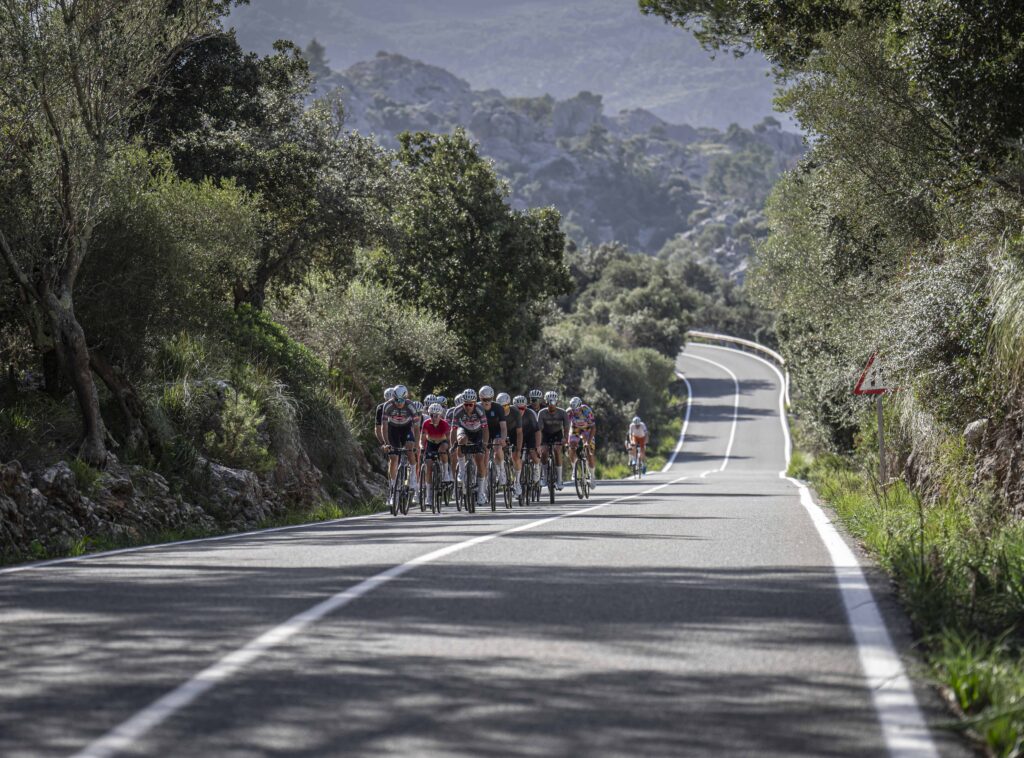
When should the training camp take place? After choosing the location, this is the second question amateur cyclists ask themselves. However, for performance reasons, answering this question is even more important than the choice of location. This how-to guide shows you step-by-step how to find your optimal training camp timing as an amateur cyclist – realistically and without your fitness gains “fizzling out.”
The most important points in 30 seconds
- Earlier is often better because you can build up for longer afterwards – but only if you can continue training after that.
- The strongest timing lever is continuity after the camp: without follow-up training, the effect quickly fades away.
- Plan at least four to six weeks of preparation before the training camp. Two to three months is optimal.
- For many amateur cyclists, the period from March to April makes sense, as more outdoor training is possible afterwards.
- An additional training camp four to six weeks before the season highlight can provide an extra boost in fitness.
Tip 1: The earlier, the better – but only with a good base
Generally, when it comes to the timing of a training camp: the earlier, the better. Because if you increase your performance through a training camp, you can then build on that and increase the training stimulus. So much for the theory.
A training camp should always be seen as added value in every road cyclist’s season build-up. To maintain this value, these weeks should always be completed with appropriate preparation and follow-up.
Tip 2: Ensure sessions before and after the training camp
The athlete should have enough time for training beforehand and also enough free hours afterwards to build on the fitness improved by the training camp. The most common mistake is not the wrong month, but too little training after the camp. For example, if you cannot continue training at a similar level after a training camp due to work or family commitments, the weather, or similar reasons, you will not get the full benefit from such a camp.
This is where the golden rule of endurance training comes into play: continuity. This must be guaranteed, especially after the training camp. Otherwise, the added value or the effect of the training camp will fizzle out just as quickly as it arrived. So, if you don’t do any training after the camp that builds on or maintains the stimuli set during the camp, you run the risk of the process becoming degenerative.
For a typical amateur athlete living in our latitudes, for example, it is not necessarily effective to head to a training camp just before Christmas, as they typically cannot complete any high-quality training over the Christmas period anyway.
If you only have the chance to go to a training camp once a year, it makes sense to fly south just before the transition to the warmer temperatures expected in Germany to work on your fitness. March or April – provided you have the appropriate preparation – are therefore well-suited for a camp.
After such a training camp, it is usually the case that the number of weekly hours from the camp might not be fully maintained. However, due to the warmer temperatures and longer daylight hours in our latitudes, more time-intensive rides of more than three hours are possible in the evenings and especially on weekends.
Tip 3: Prepare perfectly for the training camp
Speaking of preparation for the training camp: this should also influence the timing of the camp. In order to tolerate the expected loads there, four to six weeks of quality training are necessary before the camp. Two to three months are ideal.
Quality training means six to ten hours of training per week, divided into three to five sessions. In the training camp, the volume should ultimately be increased to two to two and a half times that.
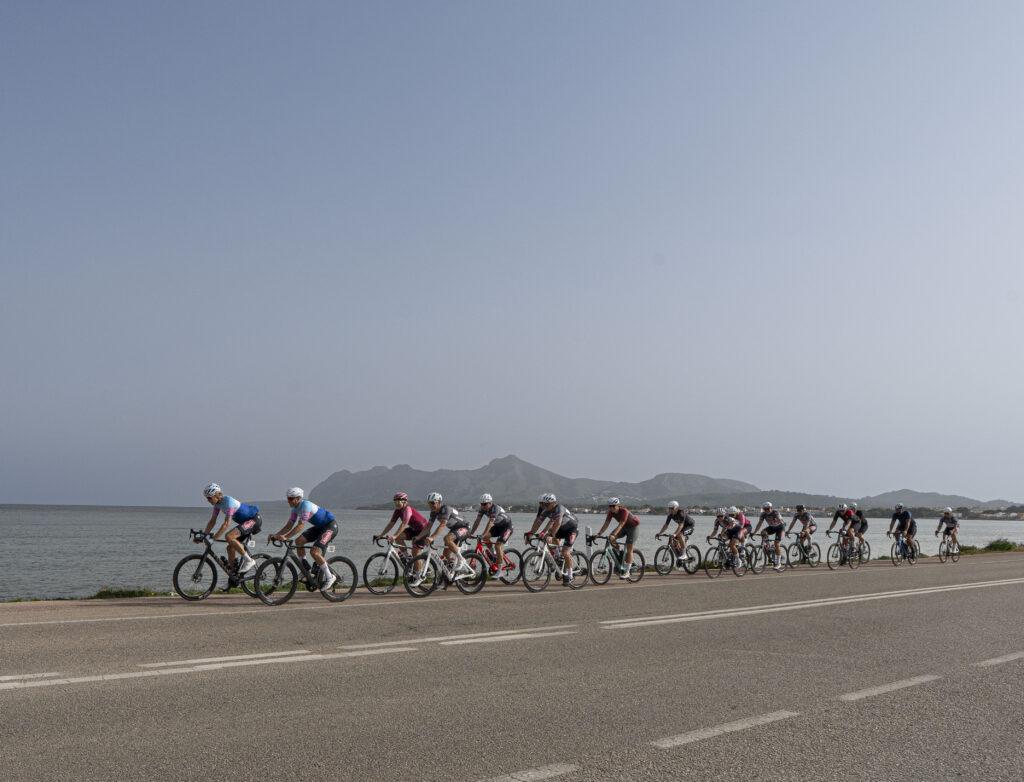
Tip 4: Increase volume cleverly during the training camp
Especially in road cycling, it makes sense not to simply multiply the number of hours by a factor, but to take energy expenditure into account. Therefore, it is smarter to train according to energy expenditure or intensity level instead of just blindly following hours.
In practice, this means: if you have already trained more intensively at home, for example with longer Z2 or threshold intervals, you can then ride slightly longer at base intensity “in relative terms” than if you were to only multiply the pure riding time.
Many road cyclists also schedule their training camp close to the competition, i.e., four to six weeks before their season highlight. This has the advantage that you can train intensively once more and step things up a notch.
However, if you only have one opportunity for a training camp in the season, you should complete it earlier in the season. Why? From a physiological perspective, there are two areas where you can improve: on the one hand, by increasing maximum oxygen uptake and, on the other hand, by lowering the maximum lactate production rate.
While the former can provide a hoped-for boost within 10 to 14 days, a sustainable change in the glycolytic system towards improved fat metabolism takes two to three months.
Long sessions in the training camp and the “incomplete” recovery before the next ride, combined with not fully replenished glycogen stores, are an effective means for this.
The athlete should start this several months before the competition, which is why an earlier training camp would make more sense. However, this assumes that there is only this one camp in the season.
Photos: Stefan Rachow / Mr. Pinko