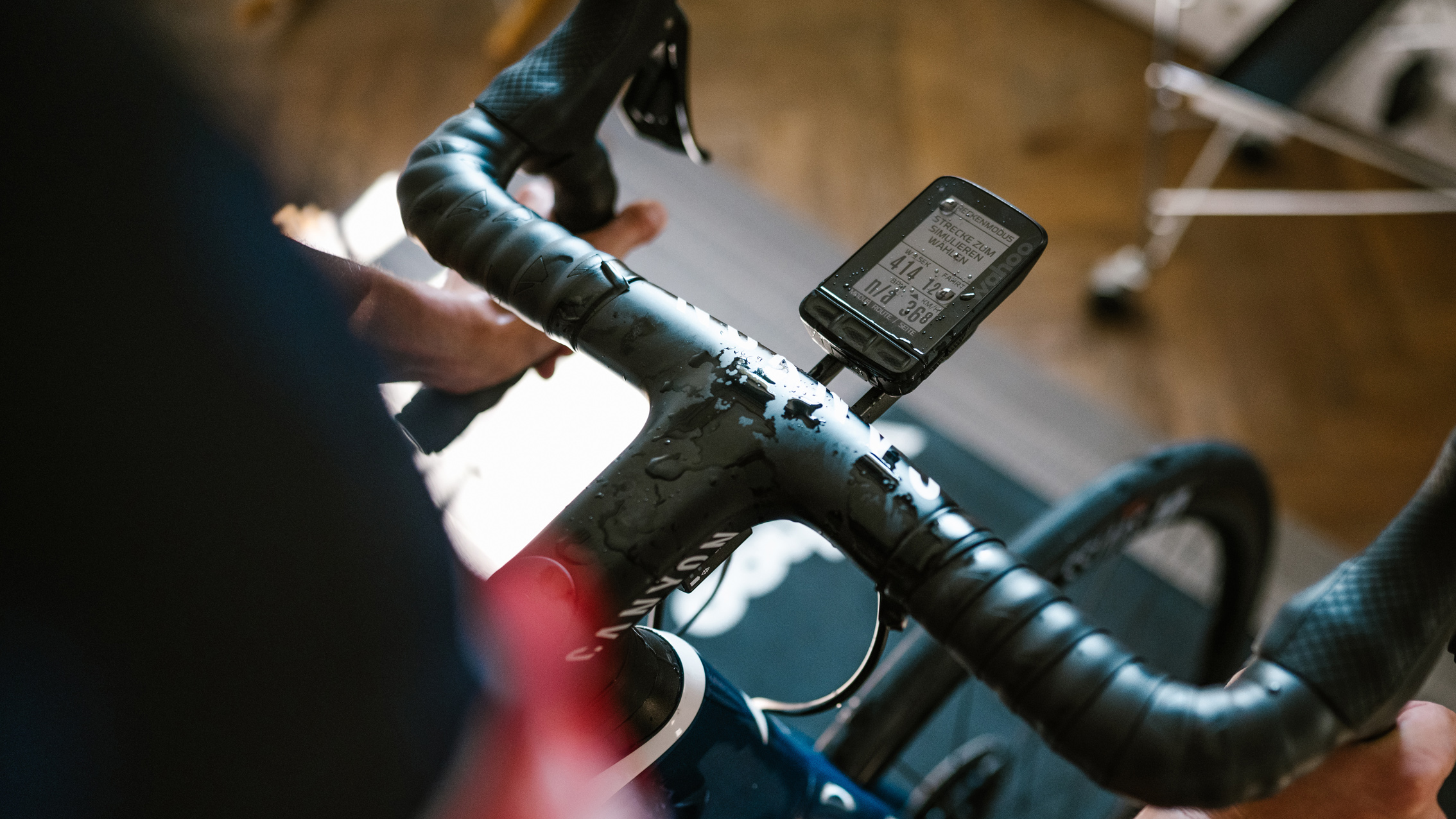
What’s better: racking up kilometers outside in the rain or riding relaxed on the smart trainer in the dry? Indoor cycling has evolved from a stopgap in winter to a real training alternative. Alpecin Cycling has compared indoor training and outdoor cycling in the most important categories.
Equipment costs: Smart trainer vs. rain kit
At first glance, indoor cycling seems expensive: a modern smart trainer starts at around 500 euros, with hardly any limits upwards. But for that you “only” need the trainer, a mat and possibly a fan.
For consistent outdoor training in all weathers, the costs quickly add up: high-quality rain jacket, long rain trousers, overshoes, waterproof gloves, hat, possibly a second set of wheels with special tires for wet conditions. A really good rain jacket, which keeps you warm and dry even at temperatures just above freezing, can easily cost around 300 euros – and that’s just one part of the overall package.
Conclusion: slight advantage outdoor, because you can get far with basic rainwear – but those who really want to train consistently in all weathers also pay a lot outside.
Training efficiency: Why indoor cycling scores
When every minute of training counts, indoor cycling shows its strengths. On the roller, you pedal permanently – there are no red lights, no stop signs, no descents in which you only roll. Outside, these rolling phases and interruptions provide many “junk miles” that significantly reduce your net training time.
Indoors, you can control the resistance in a targeted manner: intervals, long climbs, EB or VO2max units – everything is plannable and exactly reproducible. Virtual worlds and structured training plans ensure that you can “ride uphill” for, say, 30 minutes at a stretch without ever seeing a real pass.
Clear advantage indoor – especially for structured units and all those who ride according to watts and training plan.
Time budget: Get on the bike quickly with the roller
Indoor cyclists have a big advantage: you get on the roller in short cycling shorts and a jersey and are ready to go in a few minutes. No weather check, no layering of clothes, no light and mudguard orgy.
The only thing that takes some time at the beginning is getting used to the virtual training worlds: “Which route am I riding today? Which interval program?” – once that’s set up, it almost runs by itself.
Rain riders need a little longer before the start to pack themselves weather-proof. After the tour, it continues: cleaning the bike, maintaining the chain, removing dirt from shoes and clothes, feeding the washing machine – that costs additional time.
Clear advantage indoor, if your time budget is tight and you want to get as many training minutes out of your day as possible.
Fun factor: Enjoying nature vs. virtual worlds
When it comes to fun, opinions differ. Those who don’t ride exclusively according to numbers, watts and heart rate will not warm up so emotionally with indoor cycling. It just doesn’t roll so freely, the headwind is missing – and riding in your own sweat is only conditionally “enjoyable.”
It’s different outside: changing landscapes, real climbs, wind, weather, group rides – that’s the “more honest” sport with all its facets. And being out and about in zero degrees and drizzle not only hardens the body, but also the head for the spring classics.
Yes, virtual climbs like the 21 switchbacks to Alpe d’Huez on the platform of your choice can motivate and are an exciting addition. But for many racing cyclists, they still don’t replace the real outdoor experience.
Advantage Outdoor when it comes to driving fun, nature and mental toughness.
Risk of injury: Train safely on the roller
Of course, there are the legendary YouTube clips in which the roller trainer rider sails against the cupboard wall including racing bike. But realistically, this is more the exception. As long as you get on and off halfway sensibly and the bike is securely fastened, indoor cycling is very safe.
Indoors, at most a sore butt or tension due to a one-sided position threatens – both can be brought under control with bike fitting, short off-bike breaks and stretching exercises.
It looks different outside: Wet roads, leaves, dirt, potholes, damp road markings or cobblestones can quickly become a slippery slope. This is a good test for your driving skills, but also a real risk of falling – especially in rain and cold.
Advantage Indoor in terms of safety and risk of falling.
Conclusion: Indoor cycling vs. outdoor training – what suits you?
In the end, indoor cycling does not have to prevail against outdoor training – it’s the mix that makes it. The roller with smart trainer and virtual platform is ideal for:
- short, efficient units during the week
- structured interval training
- Days with bad weather or little time
Outdoor training remains unbeatable for:
- Basic endurance and long tours
- Nature experience, technique and driving skills
- mental strength and racing toughness
The good news: You don’t have to choose “rain or roller”. Those who combine both cleverly get the maximum out of their cycling year.
Photos: Kalas/Jan Brychta, Kathrin Schafbauer