When the titles at the Cyclocross World Championships for women and men are fought for in Hulst from January 31st to February 1st, 2026, the question is not only who will win the rainbow jersey. But also how the riders will fare on a significantly redesigned track. The organizers have transformed the well-known “Vestingcross Hulst” into a real World Championship course: it is longer and has spectacular water passages as well as a new meadow section that can noticeably change the race character. This will lead to a completely different race than the previous World Cups around the fortress in Hulst.
Cyclocross expert Jens Schwedler is on site in Hulst and has inspected the course. He explains to Alpecin Cycling what makes the course special. And he reveals who can calculate their chances of winning the world title for women and men.
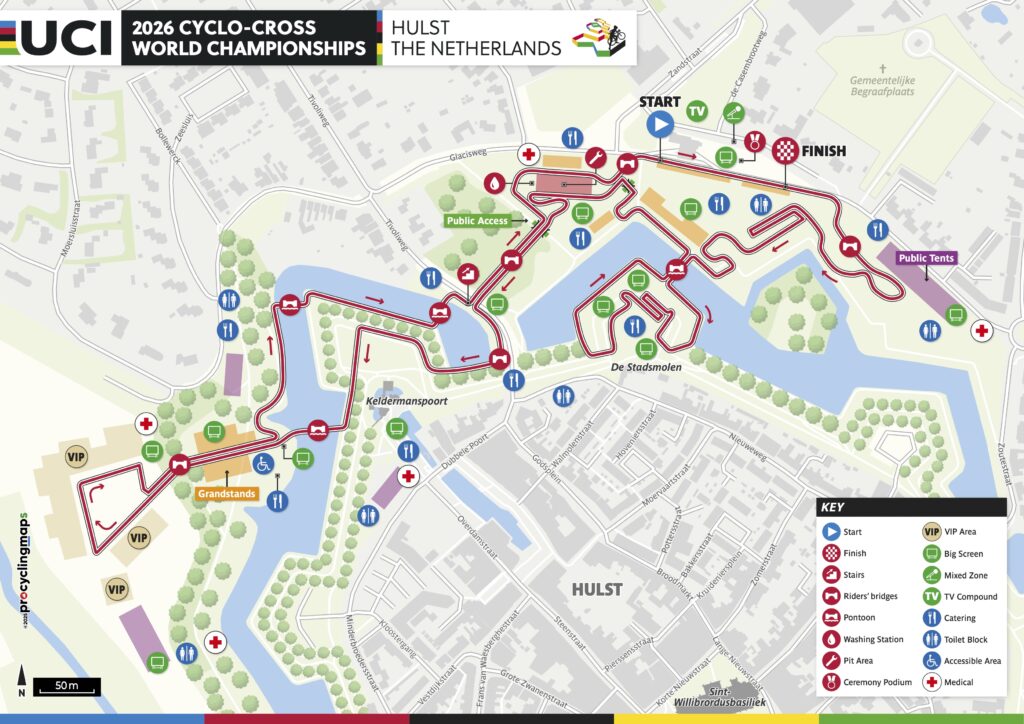
The course of the 2026 Cyclocross World Championships in Hulst
The Cyclocross World Championship Hulst 2026 will be held on a circuit of around 3.3 kilometers in length. There are around 150 meters of altitude difference per lap, distributed over several climbs and descents along the fortress walls.
“The course of the Cyclocross World Championship in Hulst has been significantly changed and specifically tightened in many areas. The numerous artificially built bridges and pontoons are particularly striking. They not only influence the flow of the race, but also allow the audience exceptionally good insights into the race. In addition, new bridges have been integrated over the moats around the historic fortress walls of Hulst, giving the course an almost arena-like character,” says expert Jens Schwedler.
In fact, the World Championship course looks like a staging in several levels. Pontoons and bridges run over the water surface, on which the riders cross the ditches, while the next changes of direction and starts await on the walls above. From the stands, the entire event can be followed in many sections almost like in a stadium. An effect that cannot be achieved with classic meadow courses.
A World Championship course for big engines
Schwedler clearly classifies the round from a sporting perspective: “Characteristically, the track can clearly be classified as a power course. Long straights determine the profile, on which consistently high performance is required. You can say without exaggeration: This is a classic MvDP track – high basic speed, long pressure phases, hardly any recovery. Watts in the legs are a clear advantage here.”
So if you want to compete for medals in Hulst, you need a big engine above all. The long, open passages on and below the fortress walls invite you to drive permanently in the red zone. There are hardly any classic “breathing zones”; even after obstacles and running passages, you immediately start accelerating again.
But the course is more than a flat power lap. “In contrast, there are extremely short, but very steep climbs and descents that structure the race. Two longer climbs are particularly decisive. It can be assumed that individual riders will be able to cope with these climbs while riding in dry conditions. It is unlikely that any female rider will be able to achieve this feat, even in good conditions. In rain and mud, it can be assumed that these passages will not be mastered by anyone while riding,” says Schwedler.
Short, steep, decisive: climbs open the race
These steep ramps are the vertical bottlenecks of the World Championship course. In dry conditions, they could provide spectacular attacks if individual riders try to conquer them while riding, while others already have to run. As soon as rain comes into play, however, the same climbs turn into slippery walls, where the tempo suddenly collapses and the sections become a running test.
The corresponding counterparts – the descents – are particularly tricky. Schwedler describes them as follows: “In addition, there are two very steep descents that will require a lot of courage, especially in the junior and junior categories. During my first complete run, I myself drove an average of 18 km/h and initially got off at one of the steepest descents in order to analyze the line choice, the surface and the braking points exactly. This illustrates the demands of these passages. Technically, the track becomes a real challenge, especially in the rain, when the short, steep slopes become slippery and mistakes are hardly forgiven.”
This shows: Hulst will not be a technically demanding circus course with artificial gimmicks, but a World Championship round in which classic cross-country skills – braking control, balance, line choice – have to be called up at high speed. Especially in the junior sector, you will see who has the courage and control to drive these descents fully in the race.
Tempo forecast: unusually fast lap times expected
Schwedler can derive how fast the course is compared to other World Championship rounds from his own recon. “The expected race pace can be derived from my training value of 18 km/h on average. It can be assumed that the professional men will drive an average of around 23 to 25 km/h in the race. Despite the many obstacles, bridges and running passages, the basic tempo remains exceptionally high!”, explains the former professional.
The fact that a World Championship course with pontoons, bridges and running passages still allows such a high average speed underlines the power character of the round. Hulst will therefore fall more into the category of “fast, modern cross” than into that of classic mud battles.
The conclusion of the cyclocross expert about the World Championship course in Hulst
Schwedler’s final conclusion is: “Hulst is not a classic technical cross, but a brutal power track with clearly defined risk zones. If you want to become a world champion here, you need an outstanding engine, courage in the descents and the ability to maintain control even under maximum load.”
Youtube video: Course preview with Puck Pieterse and Tibor Del Grosso
Favorites for the Cyclocross World Championships in Hoogerheide 2026
“This World Championship track favors riders with a very large engine, high continuous power and the ability to build up pressure again immediately after obstacles. Fear of steep descents should not play a role here,” explains Jens Schwedler.
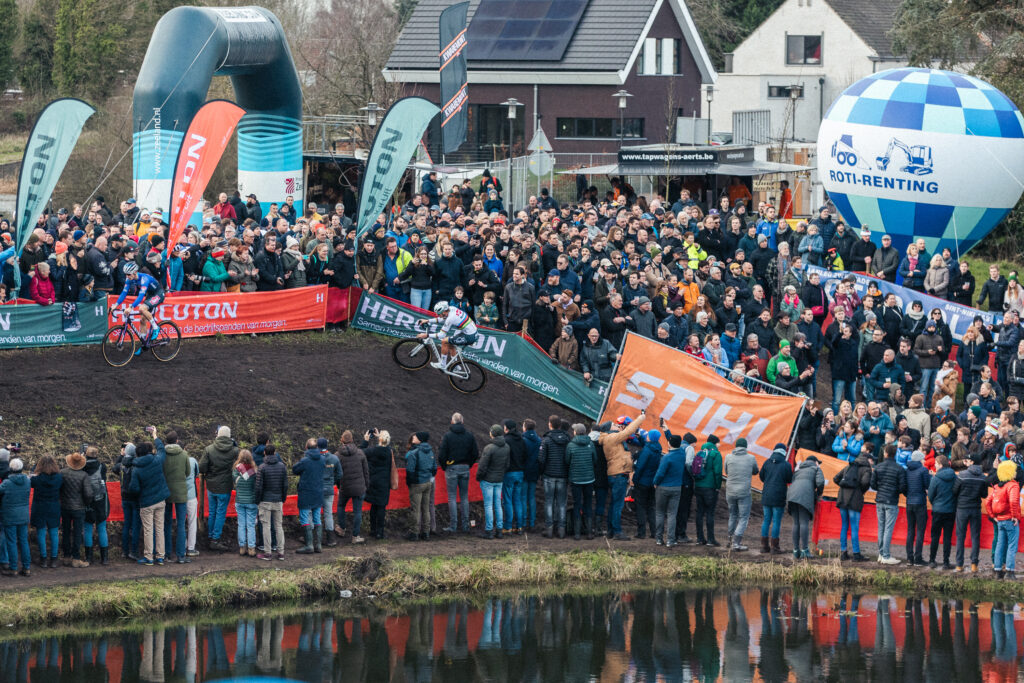
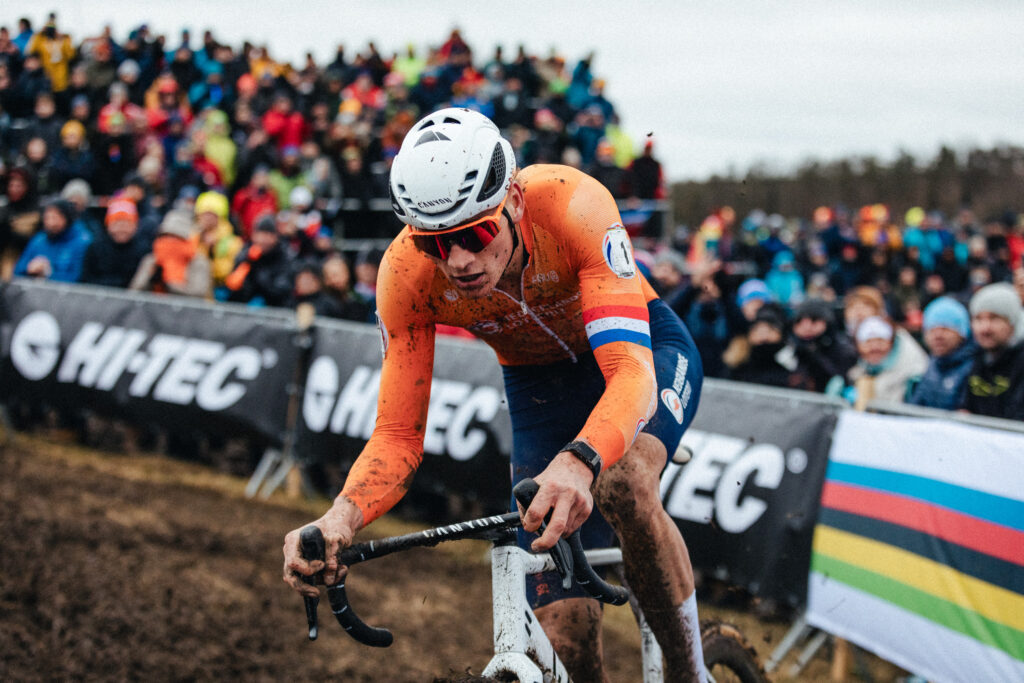
Men: A course for Mathieu van der Poel
For the men, everything points to a race in which riders with an extremely large engine and high speed stability are at an advantage. The long straights, the high average speeds and the short, sharp climbs form a course on which you cannot afford a single “idle” section.
Van der Poel has been the benchmark for years on courses with high basic speed, clearly defined key points and little recovery. Behind him is a generation of riders who have repeatedly set accents on fast, selective courses in recent times. Nys with explosiveness, Del Grosso with strong technique, and Vandeputte as robust all-rounders who do not collapse even in difficult terrain.
Schwedler sums it up accordingly. “For the men, this track is made for riders with maximum performance over long phases. Above all Mathieu van der Poel, who embodies exactly this combination of engine, control and race dominance. The extended circle of favorites includes Thibau Nys, Tibor Del Grosso and Niels Vandeputte, who have high basic speed and strong performance values.”
>> Interview with Mathieu van der Poel before the Cyclocross World Championship 2026
Women: No clear favorite
In the women’s race there is not one top favorite, which is not least due to the density at the top. But here, too, the characteristics of the course favor certain profiles. Long pressure passages, the steep climbs, the tricky descents and the expected high race pace favor riders who have shown for years that they can combine physical and mental toughness.
“In the women’s field, the race is more open, but here too, riders with a large engine are clearly at an advantage. Puck Pieterse, Lucinda Brand and Ceylin del Carmen Alvarado are particularly worth mentioning. They combine high continuous performance, racing experience and the necessary mental stability for demanding descents and difficult conditions,” says Schwedler.
This means that exactly those names are mentioned that have shaped the modern women’s cross. Pieterse with aggressive driving style and strong technique. Brand with her diesel power and the ability to constantly drive at the threshold for over an hour. Alvarado with her mixture of punch, driving technique and racing instinct.
Our Cyclocross Expert: Jens Schwedler
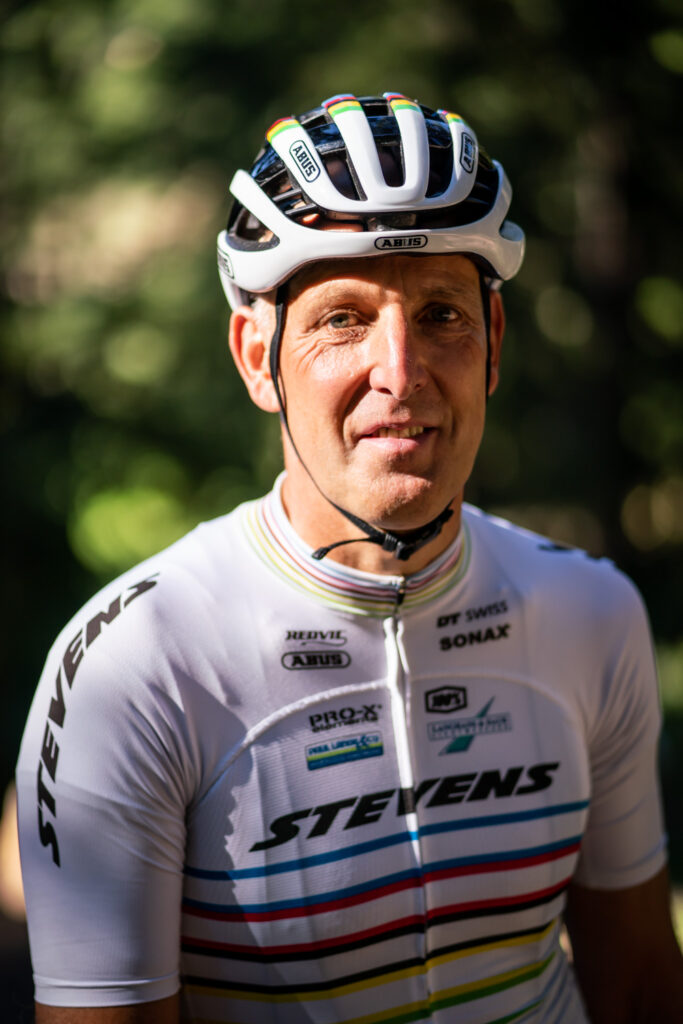
Jens Schwedler is a former German cyclocross and mountain bike professional. In cyclocross, he was a multiple German champion (including 2002 and 2005). In mountain biking, he achieved international top results, including 14th place at the 1996 World Championships.
Today, the 57-year-old from Hamburg is active in cyclocross as a trainer and sporting director and has dedicated himself specifically to promoting children and young people. He also rides masters races when time permits. Extremely successful, as his World Championship titles there prove.
He has a special connection to Mathieu van der Poel. On the one hand, his father Adrie was Schwedler’s competitor in the cyclocross races. On the other hand, Jens accompanied Mathieu’s career from the beginning, as the Dutchman was on the Stevens bike brand, Schwedler’s employer, for a long time.
Photos: Fellusch